Subscribe to receive updates on our products, special offers, and other discount information.

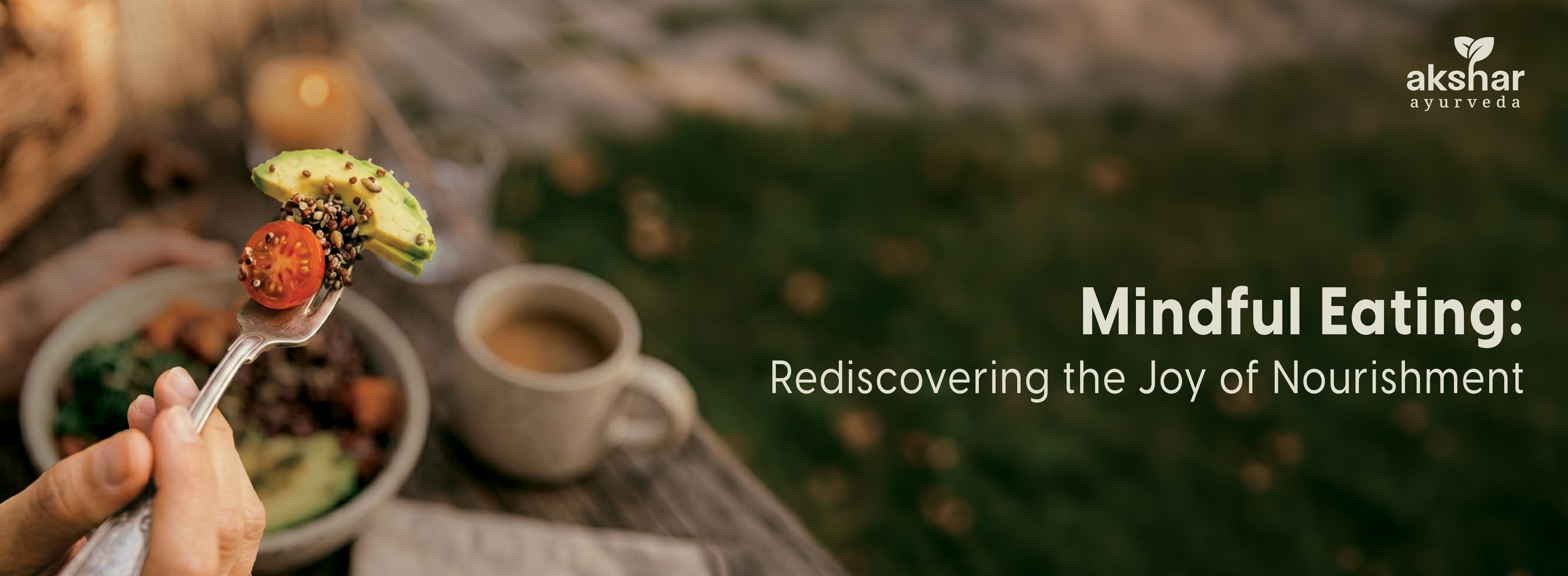
Mindful Eating: Rediscovering the Joy of Nourishment
Author: Puja Patel, ALC
Mindful Eating: Rediscovering the Joy of Nourishment
In today's fast-paced world, mindful eating has quietly faded from everyday life. Many Americans have turned meals into multitasking sessions—eating while driving, sitting in meetings, or watching TV. Eating is often treated as a task to complete or even a casual hobby, rather than a meaningful act of nourishing the body.
But eating was never meant to be rushed or distracted. At its core, it is a deeply sensory and biological process that deserves attention.
The Science Behind Slowing Down
One of the simplest yet most powerful principles of mindful eating is chewing food thoroughly—ideally until it reaches a liquid-like consistency before swallowing. This isn't just an old saying; it has real physiological benefits. The mouth plays a crucial role in digestion by releasing enzymes that begin breaking down food before it even reaches the stomach. When we rush through meals, we skip this essential step, placing more strain on the digestive system.
Taking time to chew properly allows the body to process food more efficiently and can even improve how we feel after eating.
The Role of the Tongue: Where Enjoyment Begins
It's easy to forget that the pleasure we get from food exists almost entirely in one place—the mouth. The tongue is responsible for detecting flavors and creating the enjoyment we associate with eating. Once food passes beyond the mouth into the esophagus and stomach, that sensory experience disappears.
This raises an interesting point: if the enjoyment of food only happens in the mouth, why rush through it?
By keeping food in the mouth, savoring each bite, and truly noticing flavors and textures, we can significantly increase the satisfaction we get from a meal. Instead of repetitive chewing and swallowing on autopilot, eating becomes an intentional and enjoyable experience.
Practicing Mindful Eating
Mindful eating doesn't require complicated rules; it simply asks us to be present. Here are some practical ways to bring mindfulness back to your meals:
-
Create a calm environment: Sit down to eat, ideally in a peaceful setting. If possible, enjoy your meal outdoors and connect with nature.
-
Eliminate distractions: Avoid screens, books, or work while eating. Give your full attention to your meal.
-
Express gratitude: Take a moment before eating to acknowledge and appreciate your food.
-
Engage your senses: Notice the taste, texture, smell, and even the appearance of your food.
-
Chew thoroughly: Aim to chew until your food becomes soft and smooth before swallowing.
-
Listen to your body: Pay attention to hunger and fullness cues. Sometimes what feels like hunger may actually be stress or emotional discomfort.
-
Pause after eating: Give your body a few minutes to digest. Often, you'll realize you feel satisfied without needing more.
Conclusion
Mindful eating is not about restriction or perfection—it's about awareness. By slowing down and fully engaging in the act of eating, we can transform something routine into something deeply fulfilling. We improve digestion, enhance our enjoyment of food, and reconnect with our body's natural signals.
In a world that constantly encourages speed and distraction, choosing to eat mindfully is a small but powerful act. It reminds us that nourishment is not just about fueling the body; it's about experiencing, appreciating, and honoring the simple act of being nourished.
Search Form
Recent Posts